NeurIPS 202640th Conference on Neural Information Processing Systems
Long autoregressive video models forget what they saw. CovRAG retrieves the past frames that cover what the temporal context cannot see.
Maintaining long-term geometric consistency remains challenging for long-horizon autoregressive video generation. Memory-augmented generative models address this by retrieving historical frames, but their effectiveness depends on two key design choices: what 3D-geometric evidence should represent past observations, and how memory frames should be selected from this evidence. Existing methods often rely on camera poses or field-of-view overlap, which are lightweight but too coarse to reason about pixel-wise visibility, or use explicit 3D reconstruction, which provides fine-grained evidence but is costly to maintain over long rollouts. We propose Coverage-Maximizing Retrieval-Augmented Generation (CovRAG), a depth-based memory retrieval framework that uses pretrained 3D priors to construct a target-view coverage map as lightweight 3D memory evidence. For frame selection, CovRAG maximizes residual coverage gain, iteratively retrieving frames that explain target-view regions not covered by the current context or previously selected memories. To improve scalability in long-video generation, we introduce sliding-window depth caching for efficient geometry estimation. Experiments on RealEstate10K and DL3DV10K show that CovRAG improves long-horizon geometric consistency while maintaining low latency compared to baselines.

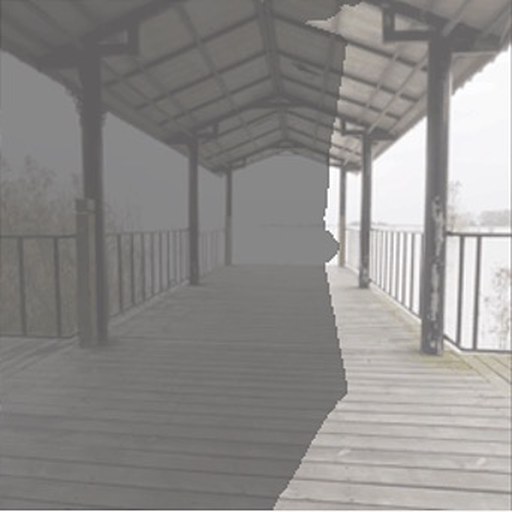
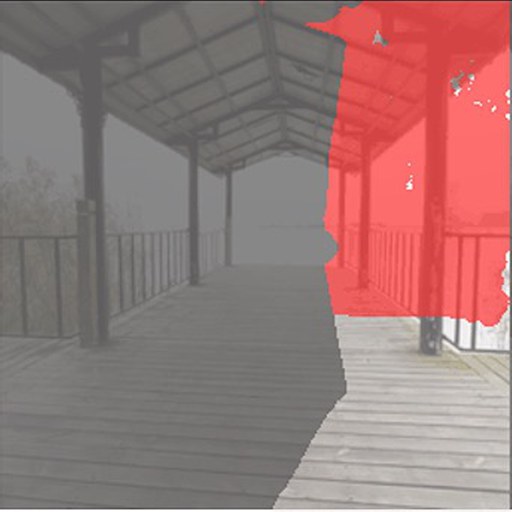
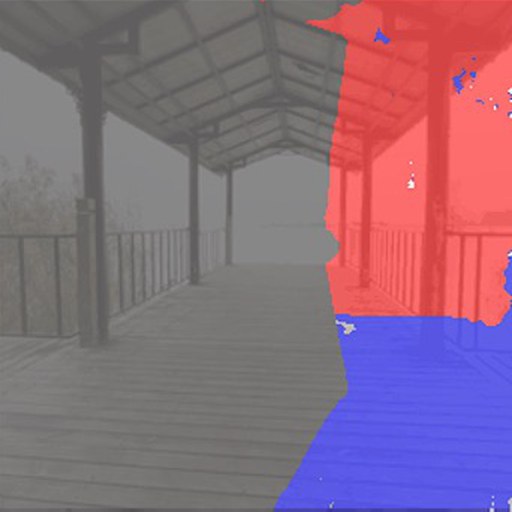
Before each frame is generated, CovRAG marks which target-view pixels the temporal context already supports, then retrieves the memories that cover the rest.


Every past frame is warped into the target view with VGGT depth and pose. A target pixel is covered if any source pixel lands on it; context maps are merged with a logical OR.
Each candidate is scored only by the uncovered pixels it would explain; the best one is retrieved, its coverage added, and the search repeats. Redundant frames score zero.
VGGT runs only on the latest L frames; each new frame’s depth is cached with the memory and reused for warping, so geometry cost per step stays bounded by L.
More consistent long-horizon rollouts on both datasets. Every method shares the same backbone and memory module; only the retrieval rule differs.
| Method | Consistency | Quality | ||||
|---|---|---|---|---|---|---|
| MEt3R ↓ | LPIPS ↓ | PSNR ↑ | SSIM ↑ | FVD ↓ | FID ↓ | |
| RealEstate10K · loop closing, T = 40 | ||||||
| DFoT (no memory) | 0.415 | 0.588 | 11.7 | 0.372 | 265.03 | 29.88 |
| + WorldMem | 0.144 | 0.197 | 18.2 | 0.555 | 242.36 | 24.77 |
| + VMem | 0.120 | 0.174 | 18.6 | 0.568 | 231.77 | 24.05 |
| + Spatia | 0.140 | 0.204 | 17.9 | 0.575 | 228.68 | 22.60 |
| + CovRAG (ours) | 0.102 | 0.154 | 18.9 | 0.576 | 226.40 | 23.00 |
| DL3DV10K · original trajectories, T = 100 | ||||||
| DFoT (no memory) | 0.430 | 0.529 | 14.5 | 0.394 | 706.70 | 88.01 |
| + WorldMem | 0.316 | 0.401 | 16.2 | 0.436 | 428.49 | 58.24 |
| + VMem | 0.315 | 0.380 | 16.3 | 0.447 | 394.79 | 57.61 |
| + Spatia | 0.327 | 0.416 | 15.9 | 0.434 | 439.64 | 56.10 |
| + CovRAG (ours) | 0.224 | 0.308 | 17.9 | 0.504 | 321.81 | 46.92 |
Table 1Long-horizon revisitation consistency (MEt3R, LPIPS, PSNR, SSIM) and generation quality (FVD, FID). Best in burgundy.
Long, spatially extended camera paths through diverse scenes. Baselines drift and deform structures; CovRAG keeps the layout.
The camera returns to its first view after a long gap. CovRAG reproduces the revisited room; baselines deform or shift it.
100-frame autoregressive generations along original DL3DV10K trajectories.
CovRAG replaces the memory-selection rule of existing pipelines without retraining.
| Method | PSNR ↑ | SSIM ↑ | LPIPS ↓ | FVD ↓ |
|---|---|---|---|---|
| WorldPlay-8B | 14.3 | 0.390 | 0.373 | 418.44 |
| + CovRAG | 14.9 | 0.411 | 0.333 | 376.83 |
| Method | PSNR ↑ | SSIM ↑ | LPIPS ↓ | MEt3R ↓ |
|---|---|---|---|---|
| GEN3C | 14.2 | 0.572 | 0.519 | 0.377 |
| + CovRAG | 17.6 | 0.675 | 0.349 | 0.251 |
Near-constant retrieval cost, and both design choices matter: fine-grained evidence and redundancy-aware selection.
| ID | Evidence | Selection | MEt3R ↓ | LPIPS ↓ |
|---|---|---|---|---|
| (a) | FoV overlap | Independent | 0.141 | 0.198 |
| (b) | FoV overlap | Residual | 0.130 | 0.187 |
| (c) | Coverage | Independent | 0.149 | 0.210 |
| (d) | Coverage | Residual | 0.100 | 0.156 |
Table 2Ablation on RealEstate10K. Coverage evidence alone is redundant under independent top-n selection (c); combined with residual gain it is best (d).
@inproceedings{joo2026covrag, title = {Retrieve What's Missing: Coverage-Maximizing Retrieval for Consistent Long Video Generation}, author = {Joo, Minseok and Park, Dogyun and Lee, Taehoon and Lee, Kyujin and Kim, Hyunwoo J.}, booktitle = {Advances in Neural Information Processing Systems, NeurIPS}, year = {2026} }